Mt Kun Peak
INR 210000INR 234000/ per person
Grade:Pro
Location: Ladakh
Altitude:7077 m
Duration:23 Days
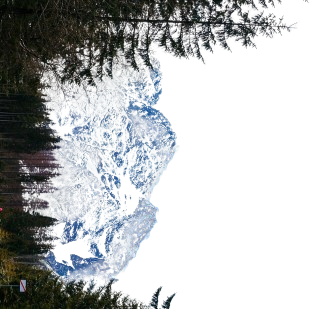
If you are looking to shift gears from amateur climbing to hardcore mountaineering, the technical climb to Mount Kun is a good place to start you off on this journey. As the second highest peak in the Zanskar Valley of Ladakh, Mount Kun is 7,077 meters of sheer energy. You can feel its strength from the very moment you lay your eyes on it. It continues to silently exude its authority by the way of its daunting structure, unnerving slopes, unannounced blizzards and the peculiar way that it holds you, sometimes gently but on others, decidedly not. This handsome mountain is part of the Nun Kun massif and stands confidently alongside its taller twin, Mt. Nun, which is 7,135M and the highest peak in the Zanskar region. Mt. Kun lies to the north of its cousin and the two are separated from each other by a 4 km long snow plateau. The third highest peak in the massif - Pinnacle Peak (6,930M) – lies to the northeast of Mt. Nun. The massif is located in Suru valley of the Kargil district about 250 km east of Srinagar.
Himalayas are an inexhaustible treasure house to which devotees of mountaineering have come for years to quench their thirst for exciting challenges. Amongst the many discovered and countless undiscovered peaks, stands Mt. Kun which draws climbers from across countries, those who aspire to go higher up to the 8000ers. A stepping stone for some and a challenge in itself for others, the mountain is a thing of beauty and does its share in lending you a dream. First scaled way back in 1913 (the summit of Mt. Nun happened only in 1953), its second successful summit would only be after fifty eight long years by an Indian Army expedition in the year 1971. Mt. Kun is a technical climb which requires navigating difficult terrain in extreme cold with throes of violent winds being a bully - pushing you around in all directions.
The nature of the mountain, it's crevasse-riddled surface, it's very unnerving habit of changing face every hour thereby changing routes, elaborate glacial formations, high gradient ice walls, technical patches, knife-edge ridges, constantly changing weather, high altitude and strong winds make it a much tougher peak to climb than some other 7,000M peaks. Mount Kun is a very demanding peak.
Since it is a technical climb which requires specific knowledge of mountaineering equipment and a specific set of skills to survive at that altitude in that terrain, this is an expedition reserved for experienced climbers only. Mountaineering certification or alternatively experience in high- altitude mountaineering and extreme temperature with one summit of over 6,500M to your credit is a necessity.
Included and Excluded
- Camping during the trek
- Guesthouse Stay in Leh on twin sharing
- Treak Meals
- Technical Equipment - Ropes, Helmet, Ice Axe, Crampons, Mountaineering Boots, Jumar, Descender, Harness
- Trek Permit Fee/IMF Permission (Upto the amount charged for Indian nationals)
- First aid medical kits and oxygen cylinder
- Qualified & experienced trek Leader, Guide and Support staff
- Transport from Leh to Road head and return
- Meals in Leh
- Meals during road journeys
- Any kind of personal expenses
- Any kind of Insurance
- Mules or porter to carry personal luggage
- Anything not specifically mentioned under the head Inclusions
- Any extra flight booking amount should be paid on actuals by the participant (over the amount mentioned in the Inclusions section)
- IMF Expedition Permit Fee of USD 1000 for upto 2 foreign nationals & USD 450 for every additional foreign nationals
- Liaison Officer fee of USD 500 to be shared among foreign climbers.
Packing List
- ✓This is a list of essential items for individuals doing the trek with HIM EXPED. This list contains only those items which the participants are required to bring with them. The list excludes those items which are provided by HIM EXPED on the trek. We have divided the items into five categories. All the items in the list are essential except for those marked as optional.This is a list of essential items for individuals doing the trek with HIM EXPED. This list contains only those items which the participants are required to bring with them. The list excludes those items which are provided by HIM EXPED on the trek. We have divided the items into five categories. All the items in the list are essential except for those marked as optional.
- ✓Trekking GearTrekking Gear
- ✓Ruck sack bag with rain cover. Qty -1Ruck sack bag with rain cover. Qty -1
- ✓Day Pack Bag - Recommended for treks with summit dayDay Pack Bag - Recommended for treks with summit day
- ✓Head Torch with spare Batteries. Qty -1Head Torch with spare Batteries. Qty -1
- ✓U V protection sunglasses. U V protection sunglasses.
- ✓Water Bottles: 2 bottles of 1 liter eachWater Bottles: 2 bottles of 1 liter each
- ✓Footwear
- ✓Non-skid, deep treaded, high-ankle trekking shoes Qty -1Non-skid, deep treaded, high-ankle trekking shoes Qty -1
- ✓Pair of light weight Slipper/Sandals Qty -1Pair of light weight Slipper/Sandals Qty -1
- ✓Clothing
- ✓Quick Dry Warm lower or Track Pants. Qty - 2Quick Dry Warm lower or Track Pants. Qty - 2
- ✓Full sleeves T-shirts/ Sweatshirts. 1 for every 2 days of trekkingFull sleeves T-shirts/ Sweatshirts. 1 for every 2 days of trekking
- ✓Pair of thick woolen socks. 1 pair for every two days of trekkingPair of thick woolen socks. 1 pair for every two days of trekking
- ✓Thermal Body warmer Upper & Lower. Qty-1Thermal Body warmer Upper & Lower. Qty-1
- ✓Undergarments. Qty - 1 for every day of trekkingUndergarments. Qty - 1 for every day of trekking
- ✓Warm jacket closed at wrist & neck .Qty-1Warm jacket closed at wrist & neck .Qty-1
- ✓Full sleeves sweater. Qty -1Full sleeves sweater. Qty -1
- ✓Rain wear ( Jacket & Pants ) . Qty-1Rain wear ( Jacket & Pants ) . Qty-1
- ✓Pair of waterproof, warm gloves. Qty-1Pair of waterproof, warm gloves. Qty-1
- ✓Woolen cap. Qty-1Woolen cap. Qty-1
- ✓Sun shielding Hat. Qty -1Sun shielding Hat. Qty -1
- ✓Toiletries
- ✓Personal toiletries kit (Small Towel, Toilet paper, paper soap, Bar soap, toothbrush, toothpaste, cold cream, etc.)Personal toiletries kit (Small Towel, Toilet paper, paper soap, Bar soap, toothbrush, toothpaste, cold cream, etc.)
- ✓Sun screen lotion small pack. Qty -1 Sun screen lotion small pack. Qty -1
- ✓Lip Balm small pack. Qty-1Lip Balm small pack. Qty-1
- ✓Utensils
- ✓Small size, Light weight & Leak proof lunch box. Qty-1Small size, Light weight & Leak proof lunch box. Qty-1
- ✓Plate. Qty- 1Plate. Qty- 1
- ✓Spoon.Qty-1Spoon.Qty-1
- ✓Tea/Coffee (plastic) Mug.Qty-1Tea/Coffee (plastic) Mug.Qty-1
- ✓Miscellaneous
- ✓Camera (Optional)
- ✓Carry your medicines in plenty in case you have any specific ailment. Consult your doctor before joining the trek.Carry your medicines in plenty in case you have any specific ailment. Consult your doctor before joining the trek.
- ✓Dry fruits, Nuts, Chocolate bars (Optional)Dry fruits, Nuts, Chocolate bars (Optional)
Frequently Asked Questions
Mt. KUN Peak is only for experienced trekkers who have done at least one 6500 m plus expedition.
If you can Jog/Run for 5 kms in 25-30 mins, you are ready to take on this trek. Once a week, you can practice running 10 kms in an hour or so to improve your endurance further. In addition to this, you can also add resistance workouts to your schedule like squats, lunges, push ups etc.
If you cannot do the above, there’s no need to worry. It is important to remember that it’s all about practice. Get on a training schedule and we can assure you that you will meet these standards in a matter of a few months.
The climb demands a few basic mountaineering skills; using an ice-axe, pitching a tent in snow, roping up, working together as a team, ascending and descending on steep gradients, gear assisted ascent as well as abseiling, climbing techniques and using technical climbing gear.
The minimum age limit is 16 years. However, minors between 16 to 17 years of age should be accompanied by their parents/ guardians. If you are above the age of 60, kindly carry a medical certificate from your doctor that deems you fit for adventure activities like trekking.
Mt. Kun Peak is located in the Ladakh region of Jammu and Kashmir. It is part of the Nun-Kun mountain massif and is situated in the Suru Valley near the town of Kargil.
Mt. Kun, located in the Zanskar Valley of Ladakh, is one of the highest peak in the area. Its sheer power can be felt from the moment it comes into view. The expedition to Mt. Kun presents adventurers with a captivating alpine landscape that is truly unforgettable. Trekking through the rugged terrain, climbers are treated to stunning vistas of vast glaciers, deep valleys, and pristine lakes. The ever-changing scenery, ranging from rocky slopes to icy cliffs, provides a constant sense of wonder and exhilaration. Nature enthusiasts are delighted by the abundance of flora and fauna, including rare alpine plants and elusive wildlife, making the expedition a truly immersive experience in the lap of nature. Reaching the mark of 7000M is a major achievement in any climber’s climbing journey, as well.
Mt. Kun throws up various challenges in the form of crevasse-ridden snowfields, constantly changing routes, intricate glacial formations, high-gradient ice walls, technical patches, knife-edge ridges, unpredictable weather, high altitude, and strong winds. These factors not only make it a more difficult climb than some other 7,000-meter peaks, but also demand high levels of teamwork.
The best climbing season to climb Mt. Kun is from June - September.
In Leh and Kargil, we stay in a hotel. On all trek days we have twin-sharing tents. On higher camps, due to lack of space to pitch tents, the tents will be on a 4 person sharing basis. The tents used on higher camps are much more spacious and sturdy with ample space.
During the climbing season, which typically runs from June to September, temperatures at base camp can range from around 0 to 15 degrees Celsius during the day, but can drop below freezing at night. At higher elevations, temperatures can drop significantly, with summit temperatures often falling below -20 degrees Celsius.
Mt. Kun Peak is a technical climb which requires specific knowledge of mountaineering equipment and a specific set of skills to survive at that altitude and traverse a difficult terrain including surfaces with crevasses, constantly changing routes, intricate glacial formations, high-gradient ice walls, technical patches, knife-edge ridges and unpredictable weather This is an expedition reserved for experienced climbers only.
The trek starts from Leh, which is a headway into Ladakh which is home to some of the highest peaks in the region. It is also a very popular tourist destination and hence easily accessible.
BSNL has the best connectivity in Leh-Ladakh region followed by Airtel. However, all the mobile networks like Idea and Vodafone also work in Leh. Please note that only postpaid numbers work in J&K state, prepaid connections will cease to work as soon as you enter Ladakh region. On & Off network coverage is available throughout this trek (BSNL & Airtel mostly).
You will find plenty of ATMs in Leh and some in Kargil as well.
Mt. Kun Peak is a Leh to Leh trip. You have the option to arrange your own transportation to Leh
Expect to reach Leh late in the night. We stay the night at the hotel. Kindly plan for your departure early the next day.
There are so many enchanting places to visit in Leh-Ladakh. During your acclimatization period, you can roam around the town and visit the monasteries; Diskit Gompa, and Lamayuru Monastery. Drive up to the Magnetic Hill and experience the crazy magnetic phenomenon on the hill. The picturesque Nubra Valley will take your breath away. The green oasis villages, the monasteries, the ruined palaces- Turtuk and Bordang; there is a whole different culture in this place. It is 150 km away from Leh. You can take a shared taxi to this route. How can you leave Ladakh without seeing Pangong Lake, the sapphire blue lake? Also, visit Gurdwara Pathar Sahib and Leh Royal Palace.
All the central equipment like tents, sleeping bags, mattresses etc. are provided. All the technical climbing equipment needed for the trek, like snow boots, crampons, gaiters, ice axe, helmet, harness etc. are also provided to you. Safety equipment used for rescue is carried by our trek leaders.
For a detailed list, check the Packing List section on this page.
Yes, there are stores/shops in Leh from where you can buy the necessary stuff. Though it is recommended that you come prepared with all the stuff. Please do not leave anything for last minute buying.
No, there is no option to offload your bag. Since it is an expedition, each climber carries their own weight all throughout. Porters do not go beyond Base Camp.
On all trek days, we provide 3 full meals (breakfast, lunch & dinner) in addition to evening snacks and tea. The meals are vegetarian and the menu is pre-decided for all days of the trek. We do provide eggs as well on certain days. If you have any specific food-related allergies or restrictions, you can let our local staff (during the trek) know, and your requests will get accommodated. We try to provide a variety of food across meals so as to avoid repetition as well as cover all nutritional needs.
On campsites, our team will dig dry pits and assemble a toilet tent to provide for safe and secure quarters. A shovel will be provided within the toilet tent as well. Using water in the toilet tent is restricted; you will need to carry your own toilet paper. On the more difficult expeditions, toilet tents are not carried to the higher camps (above base camp) due to restriction of space (to pitch the tent).
Our team carries a first aid kit and all the basic medicines required during the trek. They are equipped to be the first responders in case of any injury or health-related issues. For higher expeditions, we also carry oxygen cylinders to tend to any altitude-related health conditions.
You leave the last charging point behind at your hotel in Leh and Kargil. From here on, we will be camping in the wilderness with no access to electricity.
A copy of your ID Proof and Medical Certificate are the mandatory documents required for this trek. (Soft copies for all of these are to be sent to us & originals should be on your person while on the trek.)
Yes, insurance for any high-altitude activity is highly recommended to cover for the cost of rescue, evacuation and any other emergency service required as well as to cover for medical cost in case of injury or illness during the trek. You can buy it on your own. Alternatively, if you want us to buy it on your behalf, you can speak to our post-booking team and they will arrange it for you. They will send you a payment link once the insurance has been purchased.
Yes, there are multiple permits required for this. We obtain the permits on every trekkers’ behalf. All the permit costs are included in your trek cost.
Yes, you will receive e-certificates (of completion) after the trek. It will bear your name, the trek, and the maximum altitude you achieved on the trek. In case you were unable to finish the trek, you will get a certificate of participation.
On completion of the trek, the certificate will show up on your dashboard on our website. You can download it directly from there.
Mt KUN is in India. If you are coming from outside, you will need a visa to enter the country. You should be able to find the rules for obtaining a Visa based on your home country on the internet. This information is easily available.
This does not apply to you if you are an Indian citizen. In case you don’t hold an Indian passport, you will need to check online for Visa application rules based on your home country.
If you are not an Indian citizen, you will need Travel Medical Insurance to travel to the country. Please make sure that your insurance policy is valid for the altitude you are going to and the activity you are undertaking, to cover risks during the trek. The insurance policy provided by HIM EXPED does not cover foreign nationals. So, please do not purchase it while making the booking from our website.
The Himalayas house the tallest mountains in the world and have long been a treasure trove for all adventure enthusiasts. The variety in terms of beauty, terrain, landscape, geography, culture and opportunity for adventure in the Himalayas, remains undisputedly unmatched.
You can make the booking any time depending on availability of slots in our fixed departure batches. You will get this information at the top of this page.
A Basic Mountaineering Course certification from one of the five recognized mountaineering institutes in India is a minimum requirement to join our team. Our field experts are also trained in basic medicine and first-aid response. For practical training, we simulate on-ground situations to prepare them for quick thinking and quick response during emergencies.
We follow a rigorous regime of hiring and training our experts on the field. Each trek leader is a certified mountaineer with years of experience in the field. The interview process to bring a trek leader on-board is close to 6 months long where we assess various skills as well as personality traits of an individual. They also go through an on-field assignment as part of the hiring process. Trek leaders also progress in time from leading easier treks before advancing to the more difficult ones where the stakes are higher.
It absolutely is. We recognize, value and embody the ideology that the world of outdoor adventure can benefit from diversity. We make it our mission to create outdoor spaces as equally accessible and safe for all genders as possible. We also encourage women leaders in the outdoors and all of our staff (irrespective of gender) is gender sensitised. As for accommodation, in case there are no other women on the trek, a solo female trekker is provided with a separate single-occupancy tent.
Our batch sizes for Mt. Kun are capped at 12 with the trek leader and sherpa’s to trekker ratio of 1:2.
In addition to their qualification, our trek leaders are trained to tackle any and all kinds of sudden conditions that may present themselves on ground. During our recce stage, we study the trail in great detail and map out rescue routes before opening it up for our trekkers. We also have local support staff stationed in each area to arrange for emergency services at the place of need as quickly as possible.
We mobilise road rescue efforts where our trek leaders bring the person to be rescued down to the trailhead of the trek from where a car can take them to the nearest healthcare facility. The cost of rescue is not covered in the trek fee that we charge. It must be borne by the participant. However, if you opt for the insurance the cost of rescue operations can be claimed from the Insurance company on production of valid proof e.g. doctor’s prescription & hospital bills etc. Please note that HIM EXPED is only a facilitator & not a party in the Insurance policy. You need to raise the claim request directly with the Insurance company. HIM EXPED is not responsible for any rejection of claim. You can call the insurance provider directly for any clarifications related to the Insurance policy. Although not mandatory, we recommend buying the insurance. You don’t necessarily have to get the insurance we provide, you can pick an Insurance company of your choice and get a policy directly from them. If you need more information on the terms and conditions of the insurance policy, get in touch with our customer support team.
All the gear used on our treks and expeditions is tried and tested, maintained for good quality and is overall top notch in quality and condition. We are continually looking to obtain the best of everything there is in the market so as to ensure optimum safety.
That will depend on the nature of your medical condition. Do give us a call, and one of our people will help you understand what is best for you. If not this, we are sure there would be plenty of other options you can choose from our vast portfolio to pick as your next adventure.
We have rolling camps on all our trails.
This is a complex question and has a compound answer. The simple response is that because it is bad for the environment which we dearly
There are a number of measures that we take to prevent overcrowding on some of the most popular trails. Some of them are capping our group size at 15, capping the number of trekkers on a trail to 250 per season, constantly looking for newer trails and routes to spread the crowd around and providing incentives to our trekkers to try unexplored territories with us. We put in place the system of dynamic pricing, which is the first of its kind in the trekking industry, which incentivises trekkers to choose less crowded trails by offering higher discounts. We have noticed, since we started this system, that this has helped in a big way to spread out the crowds between trekking routes.
Some basic things to remember are: do not use water, do not dispose of anything non-biodegradable inside the pits, carry your own roll of toilet paper and remember to cover up after yourself to leave a clean toilet for your fellow trekkers. Everything else is much the same like using an Indian style home toilet!
Most wet wipes are not biodegradable which means it could take 100 years or more for them to decompose – not the best thing if you are trying to ‘Leave No Trace’, right?
Each trekker is responsible for the use and hygiene of their own eating utensils. And as a measure to maintain proper hygiene, we do not provide plates and spoons. Also, dipping your hands in cold water to wash your own utensils adds something to the overall joy of high-altitude living, wouldn’t you think?
On making the payment, you will receive a booking confirmation along with the packing list and a copy of the undertaking form via email. You will subsequently receive emails detailing documents required, how to prepare physically and mentally for the trek, information on pick-up location on the first day etc. Please add info@himexped.com in your trusted emails list to make sure our emails don't go to your spam folder.
A Whatsapp group will be formed a few weeks before departure. Members from our team are on those groups as well. Feel free to seek any clarifications you require in regards to the trek, on the group itself. Updates related to transportation/pickup point/pickup timing, accommodation etc. will be shared on the Whatsapp group as well.
Yes, we create a Whatsapp group a few weeks before the departure date so that the flow of information remains smooth and transparent.
Yes, it is one of the mandatory documents you will need to submit before the trek starts. The soft copy is to be sent to us & the original should be on your person while on the trek.
Yes, we will provide you an undertaking form through email which will need to be filled up by you and submitted to us post booking